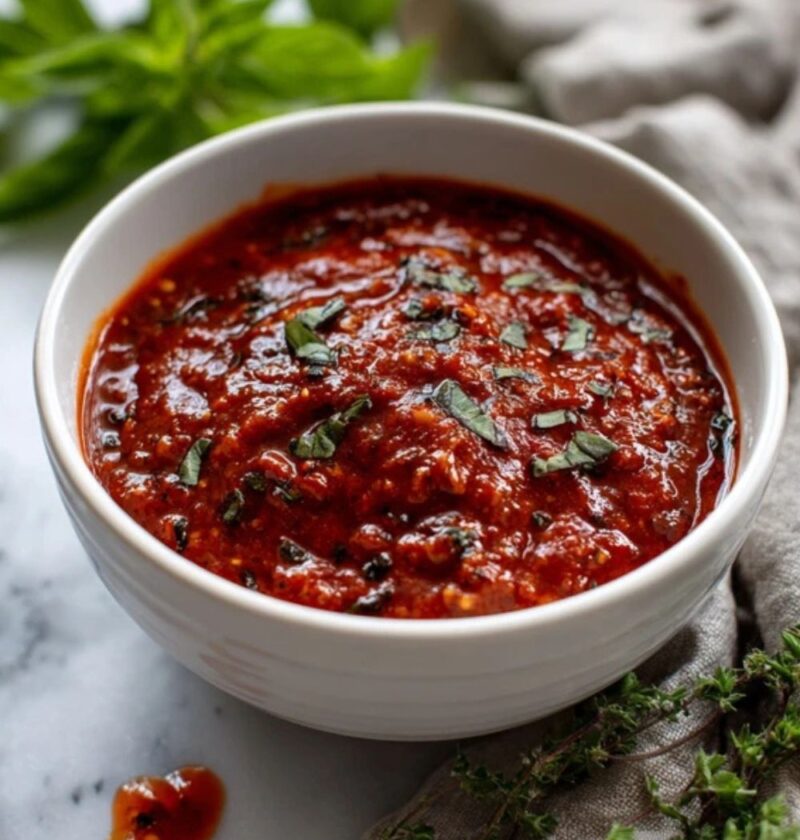
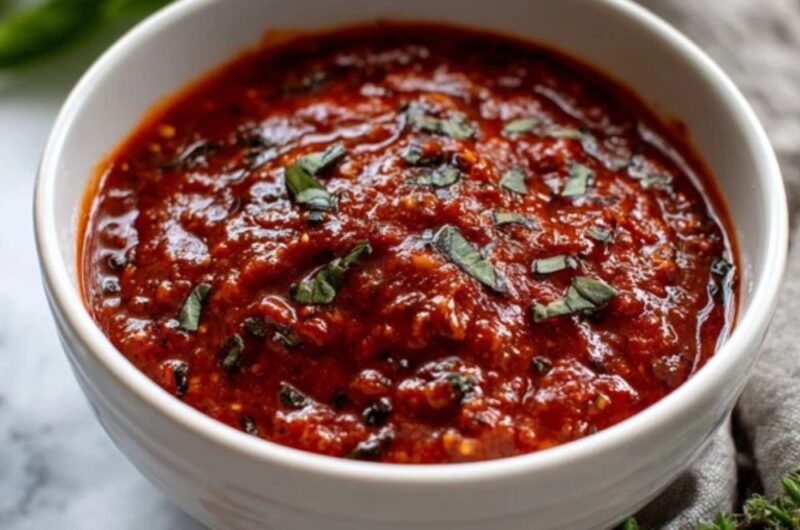
This thick, robust Low Sodium Pizza Sauce Recipe is made with no-salt-added tomatoes, garlic powder, and dried herbs, ready in just 20 minutes. The sauce simmers down until it becomes a rich, fragrant paste that clings perfectly to your spoon. I started making this when store-bought options proved too salty for my family.
Try More Recipes:
Jump to Recipe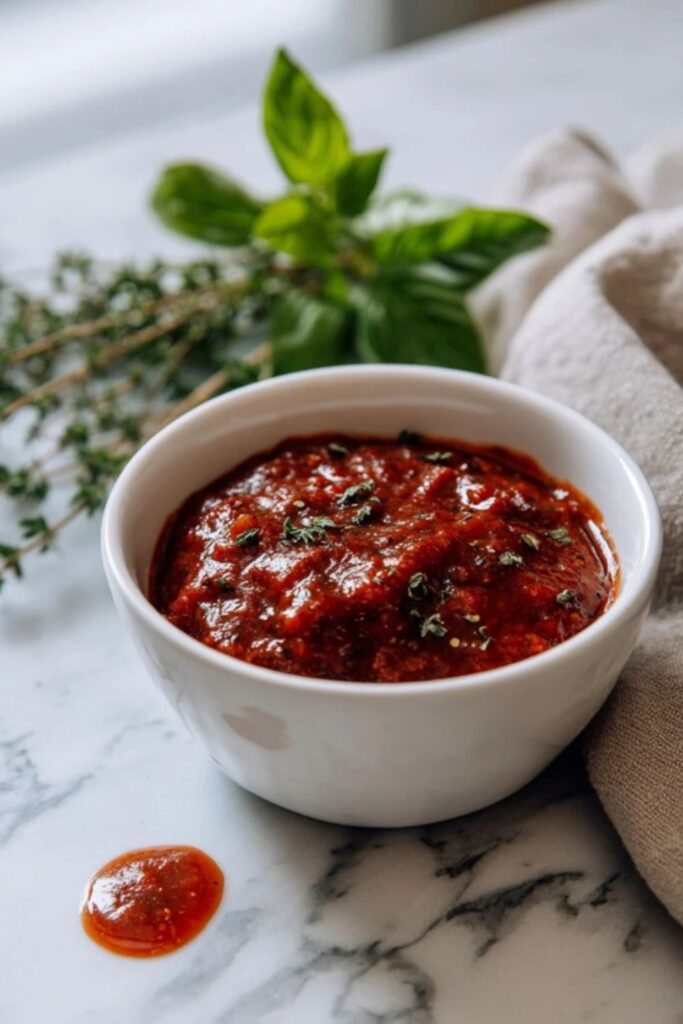
Better Than Takeaway
Store-bought pizza sauces are notoriously packed with hidden salt. I assumed making my own without the sodium would result in a bland, watery mess.
The trick I learned was letting the sauce simmer longer to concentrate the natural tomato flavors. Adding a generous amount of dried herbs completely makes up for the missing salt.
Low Sodium Pizza Sauce Recipe Ingredients
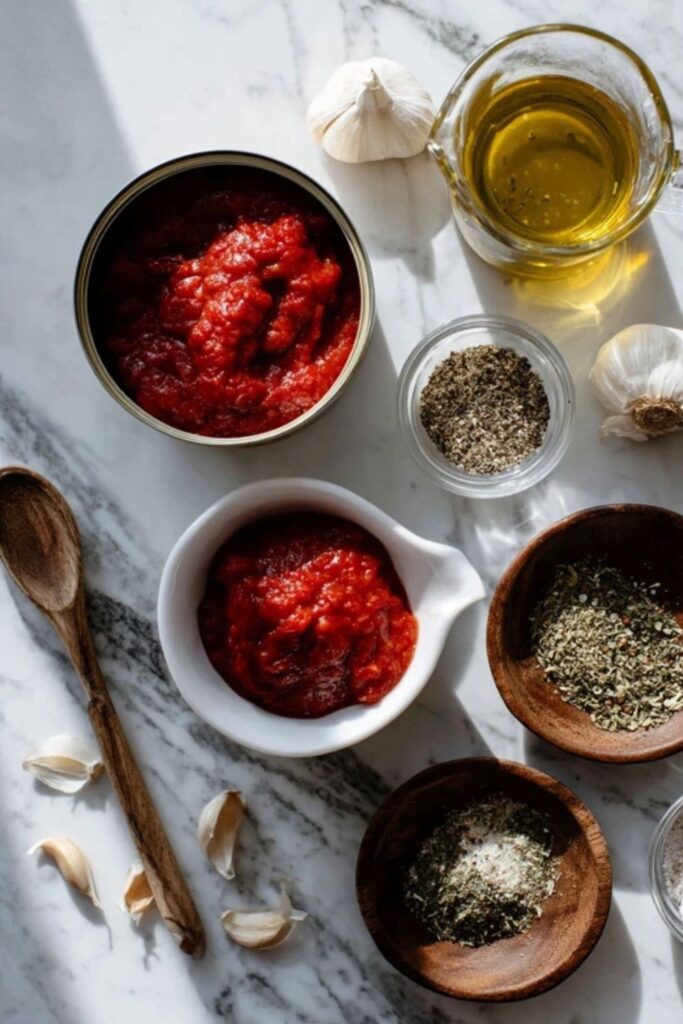
- 1 (15-ounce) can no-salt-added crushed tomatoes
- 2 tablespoons no-salt-added tomato paste
- 1 tablespoon extra virgin olive oil
- 1 teaspoon dried oregano
- 1 teaspoon dried basil
- 1/2 teaspoon garlic powder
- 1/2 teaspoon onion powder
- 1/4 teaspoon black pepper
- 1/2 teaspoon sugar
How To Make Low Sodium Pizza Sauce Recipe
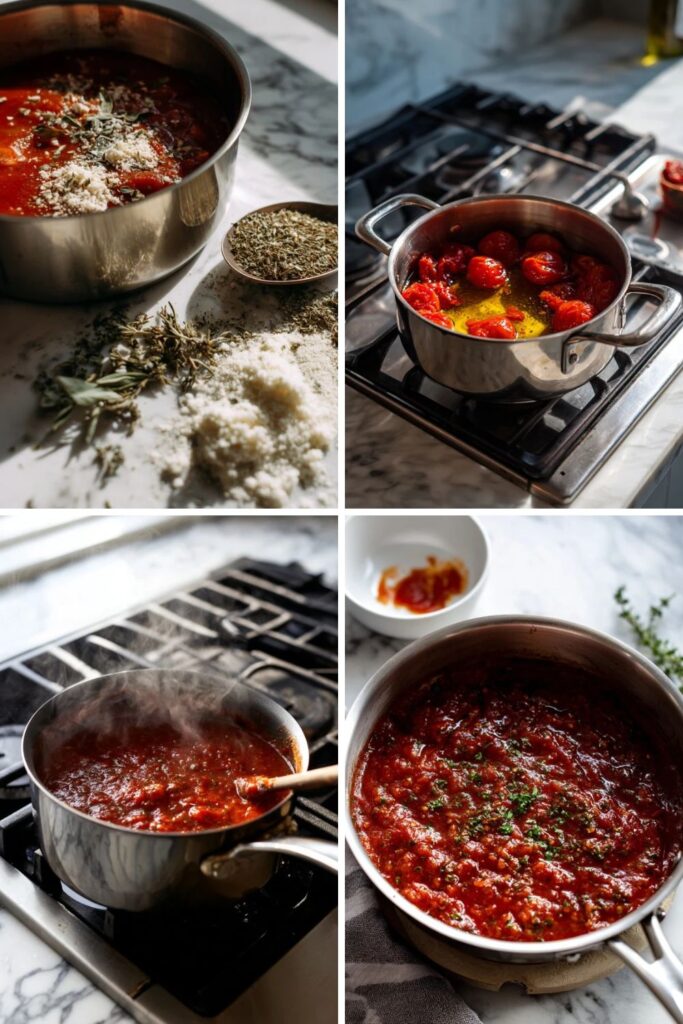
- Mix the base: In a medium saucepan, combine the crushed tomatoes, tomato paste, and olive oil over medium heat.
- Season the sauce: Stir in the dried oregano, dried basil, garlic powder, onion powder, black pepper, and sugar until well blended.
- Simmer to thicken: Reduce the heat to low and let the sauce simmer gently for 15 minutes, stirring occasionally so it does not burn.
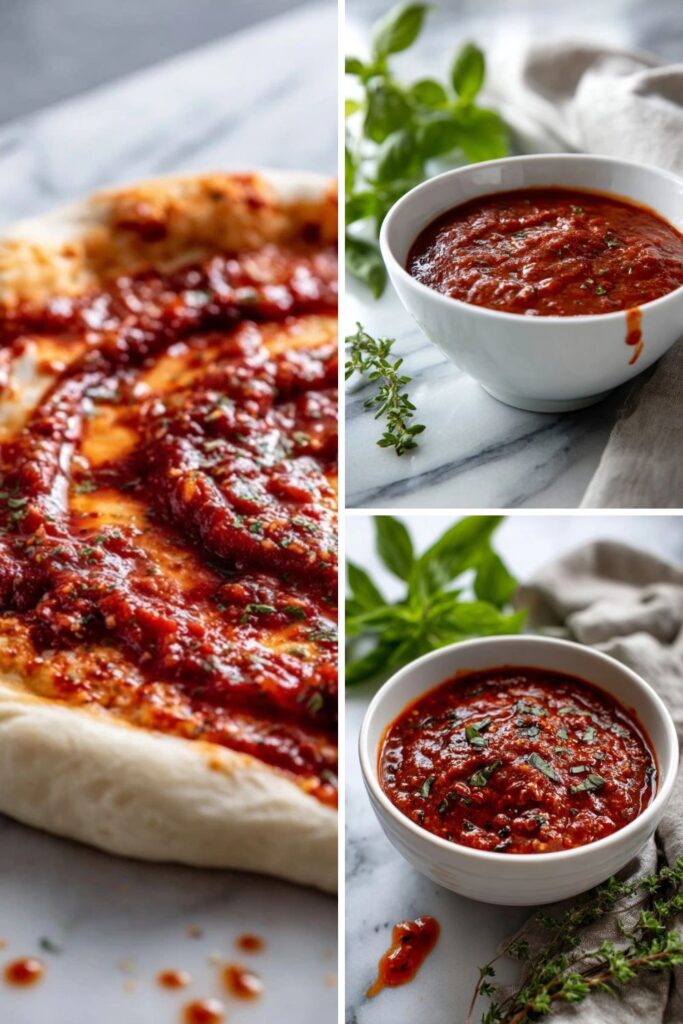
- Cool before using: Remove the pan from the heat and let the sauce cool completely before spreading it onto your pizza dough.
Recipe Tips
- Use high-quality tomatoes: Since this recipe relies entirely on the tomatoes for flavor, choose a premium no-salt-added brand.
- Do not skip the sugar: A tiny amount of sugar cuts the natural acidity of the canned tomatoes and balances the overall taste.
- Let it cool: Applying hot sauce to raw pizza dough will make the crust soggy before it even hits the oven.
What To Serve With Pizza Sauce
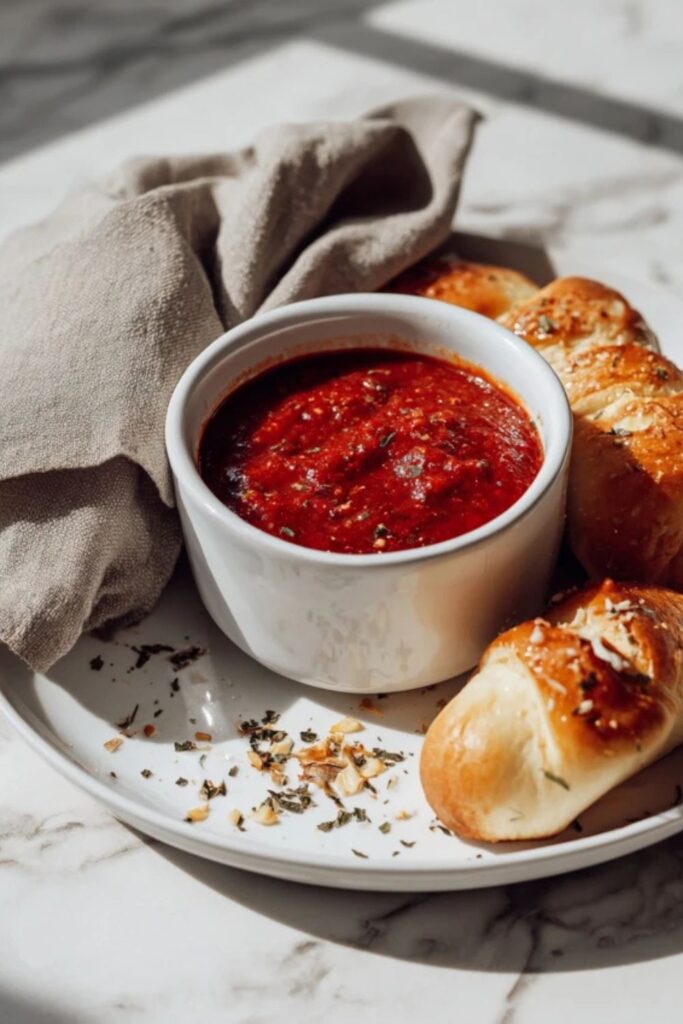
This sauce pairs perfectly with a homemade whole wheat pizza crust and fresh mozzarella. You can also use it as a low-sodium dipping sauce for homemade garlic knots or roasted vegetables.
How To Store
Keep the leftover sauce in an airtight jar in the fridge for up to one week. You can also freeze it in portions or ice cube trays for up to three months.
FAQs
Can I use fresh tomatoes instead of canned?
Yes, but you will need to blanch, peel, and blend them first. They also require a much longer simmer time to reduce the water content.
Why add olive oil to the sauce?
The oil adds richness and helps carry the fat-soluble flavors of the herbs throughout the sauce.
Can I make this sauce without cooking it?
You can mix the ingredients cold, but simmering helps hydrate the dried herbs and concentrates the tomato flavor significantly.
Nutrition
- Calories: 45 kcal
- Total Fat: 2g
- Saturated Fat: 0g
- Cholesterol: 0mg
- Sodium: 15mg
- Total Carbohydrate: 6g
- Protein: 1g
Try More Recipes:
Low Sodium Pizza Sauce Recipe
6
servings5
minutes15
minutes20
minutesThis Low Sodium Pizza Sauce Recipe yields a thick, robust spread using no-salt-added tomatoes, garlic powder, and dried oregano in just 20 minutes. It makes building a healthier homemade pizza incredibly easy for your next family dinner.
Ingredients
1 (15-ounce) can no-salt-added crushed tomatoes
2 tablespoons no-salt-added tomato paste
1 tablespoon extra virgin olive oil
1 teaspoon dried oregano
1 teaspoon dried basil
1/2 teaspoon garlic powder
1/2 teaspoon onion powder
1/4 teaspoon black pepper
1/2 teaspoon sugar
Directions
- 1. Mix the base: In a medium saucepan, combine the crushed tomatoes, tomato paste, and olive oil over medium heat.
- 2. Season the sauce: Stir in the dried oregano, dried basil, garlic powder, onion powder, black pepper, and sugar until well blended.
- 3. Simmer to thicken: Reduce the heat to low and let the sauce simmer gently for 15 minutes, stirring occasionally so it does not burn.
- 4. Cool before using: Remove the pan from the heat and let the sauce cool completely before spreading it onto your pizza dough.