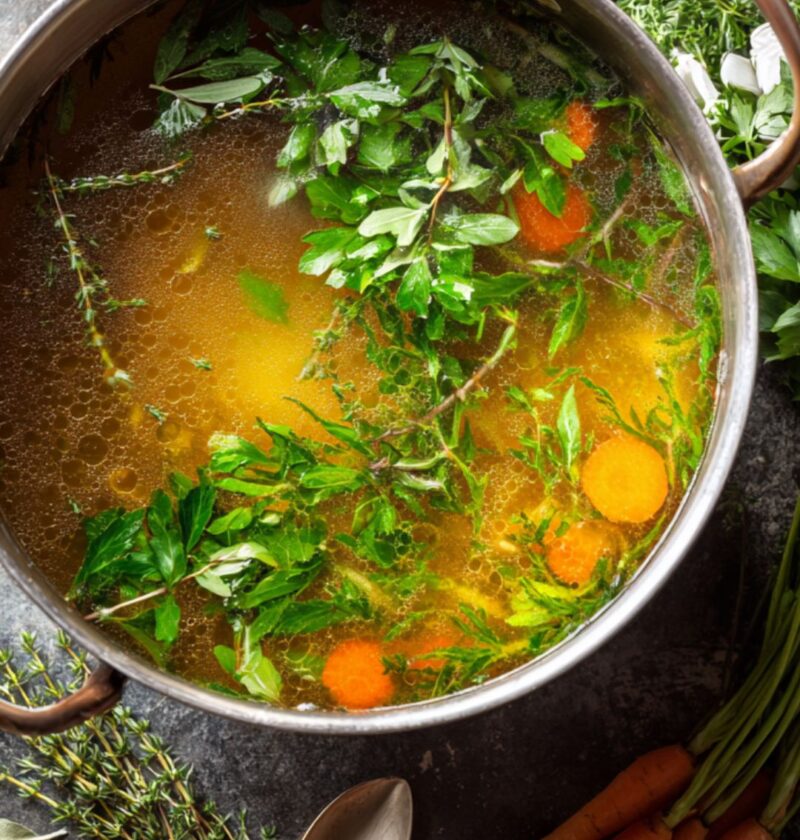
This robust, aromatic Low Sodium Vegetable Stock Recipe is made with fresh carrots, celery, and herbs and ready in 70 minutes. The rich golden liquid simmers quietly on the stove, releasing deep earthy aromas into your kitchen. I always keep a batch of this healthy staple in my freezer for busy weeknights.
Try More Soups Recipes:
Jump to RecipeWhy You Will Love This Low Sodium Vegetable Stock Recipe:
- Full Control Over Sodium: Unlike store-bought versions that are often hidden salt bombs, this recipe allows you to control exactly how much (if any) salt goes in, making it perfect for heart-healthy diets.
- Deep, Concentrated Flavor: By slowly simmering a high ratio of aromatics like leeks, fennel, and mushrooms, you create a rich “umami” base that tastes far superior to watered-down commercial stocks.
- Reduces Food Waste: It is the ultimate way to use up vegetable scraps—onion skins, carrot tops, and celery ends—turning kitchen “trash” into liquid gold.
- Clean and Natural Ingredients: You avoid the artificial preservatives, yeast extracts, and “natural flavors” typically found in bouillon cubes or boxed broths.
- Highly Versatile Base: This neutral yet flavorful stock serves as the perfect foundation for everything from creamy risottos and hearty stews to light, refreshing noodle soups.
- Incredible Cost Savings: Using leftover vegetable trimmings and water makes this stock practically free to produce compared to the high price of organic store-bought cartons.
- Freezer-Friendly Convenience: You can freeze the stock in ice cube trays or quart bags, giving you portion-controlled access to a flavor-booster whenever a recipe calls for it.
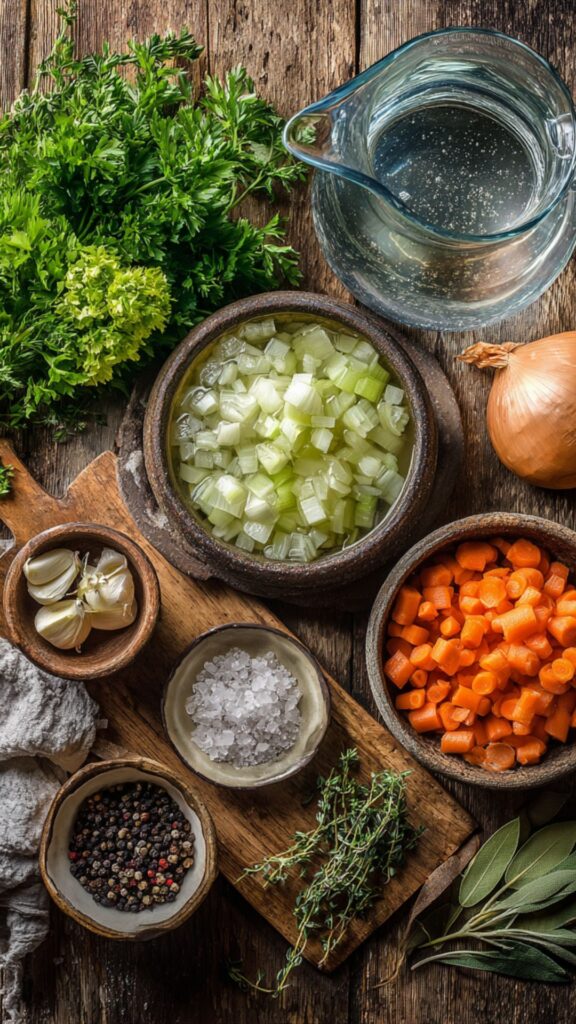
Low Sodium Vegetable Stock Ingredients
- 2 large onions, roughly chopped
- 3 large carrots, roughly chopped
- 3 celery stalks, roughly chopped
- 4 cloves garlic, smashed
- 1 bunch fresh parsley
- 4 sprigs fresh thyme
- 2 bay leaves
- 1 teaspoon black peppercorns
- 10 cups cold water
How To Make Low Sodium Vegetable Stock
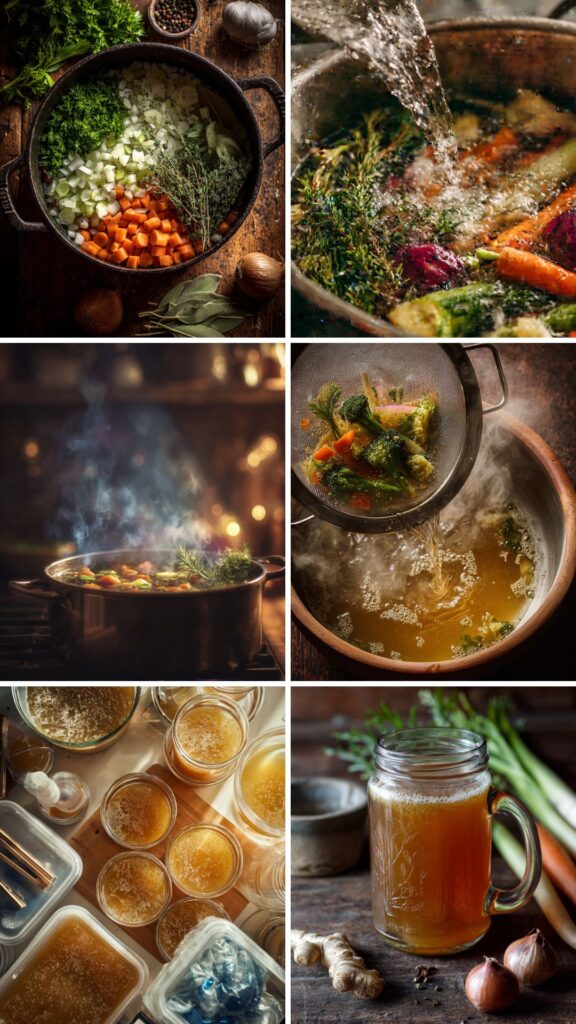
- Combine Ingredients: Place the chopped onions, carrots, celery, garlic, parsley, thyme, bay leaves, and black peppercorns into a large stockpot.
- Add Water: Pour the cold water over the vegetables, ensuring everything is fully submerged in the pot.
- Simmer the Stock: Bring the pot to a gentle boil over medium-high heat, then reduce the heat to low and simmer uncovered for 60 minutes.
- Strain the Liquid: Carefully pour the mixture through a fine-mesh sieve into a large bowl, pressing the solids gently to extract all the liquid.
- Cool and Store: Let the stock cool completely before dividing it into airtight containers or freezer bags for storage.
Recipe Tips
- Keep the skins on: Onion skins add a beautiful deep golden color to the finished liquid.
- Avoid starchy vegetables: Potatoes and turnips will make the liquid cloudy and overly sweet.
- Start with cold water: Cold water extracts flavors more effectively from the vegetables as it slowly heats up.
What To Serve With Low Sodium Vegetable Stock?
Since vegetable stock is a versatile base, it is best served as part of a larger dish. Use it to simmer creamy mushroom risotto or as the foundation for a hearty minestrone soup. It also makes an excellent poaching liquid for lemon-herb chicken or delicate white fish. For a simple side, use the stock to cook quinoa or couscous to infuse them with savory depth. It even elevates braised greens like kale or Swiss chard.

How To Store Leftovers Low Sodium Vegetable Stock?
Store the cooled liquid in airtight glass jars in the fridge for up to 5 days. For longer storage, freeze it in heavy-duty bags or silicone ice cube trays for up to 3 months.
How To Reheat Leftovers Low Sodium Vegetable Stock?
- Stovetop (Best for Large Amounts): The stovetop is the most efficient way to heat a batch for soups or sauces. Pour the stock into a pot and set it over medium-high heat. Bring the liquid to a rolling boil for at least one minute to ensure it is heated evenly and safely. If you find the flavor has concentrated too much during storage, simply add a splash of water to balance it out.
- Microwave (Best for Quick Use): If you only need a small amount for a recipe or a mug of warm broth, the microwave is fastest. Pour the stock into a microwave-safe container, leaving some room at the top to prevent splashing. Cover it loosely with a lid or paper towel and heat on high in 1-minute intervals, stirring in between. Continue until it is steaming hot throughout.
FAQs
Can I leave the stock simmering longer?
Yes, but simmering past 90 minutes can make the vegetable flavors turn slightly bitter. Keep it to an hour for the freshest taste.
Can I use vegetable scraps?
Absolutely, save clean carrot peels, onion ends, and celery leaves in the freezer until you are ready to brew a batch.
Why is my stock cloudy?
Boiling it too rapidly can break down the vegetables and cause cloudiness. Keep the heat low enough to maintain a gentle simmer.

More Soups Recipes:
- Low Sodium Chicken Tortilla Soup Recipe
- Low Sodium Broccoli Cheese Soup Recipe
- Low Sodium French Onion Soup Recipe
Low Sodium Vegetable Stock Recipe Nutrition Fact
- Calories: 15 kcal
- Total Fat: 0g
- Saturated Fat: 0g
- Cholesterol: 0mg
- Sodium: 35mg
- Total Carbohydrate: 3g
- Protein: 1g
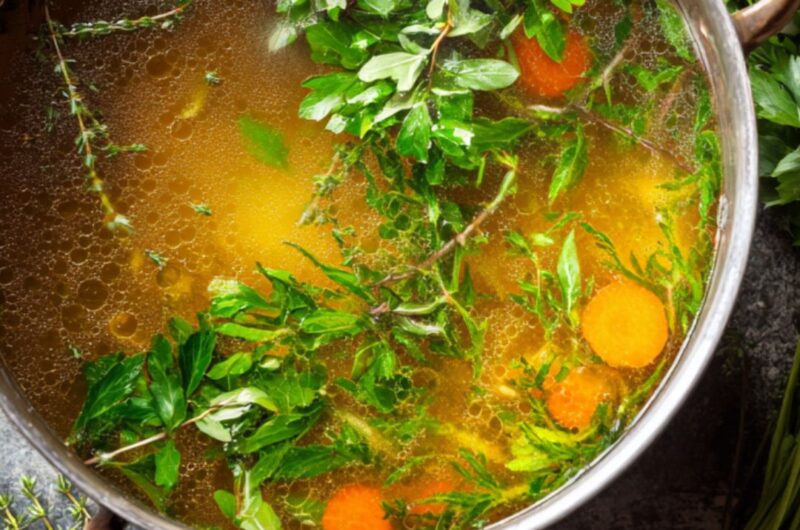
Low Sodium Vegetable Stock Recipe
Course: Soups, Dinner, LunchCuisine: AmericanDifficulty: Easy8
servings10
minutes1
hour15
kcal1
hour10
minutesLow Sodium Vegetable Stock Recipe features robust, aromatic vegetables and fresh herbs brewed perfectly in 70 minutes. This homemade kitchen staple offers deep flavor without the heavy salt, making healthy weeknight dinners incredibly easy.
Ingredients
2 large onions, roughly chopped
3 large carrots, roughly chopped
3 celery stalks, roughly chopped
4 cloves garlic, smashed
1 bunch fresh parsley
4 sprigs fresh thyme
2 bay leaves
1 teaspoon black peppercorns
10 cups cold water
Directions
- 1. Combine Ingredients: Place the chopped onions, carrots, celery, garlic, parsley, thyme, bay leaves, and black peppercorns into a large stockpot.
- 2. Add Water: Pour the cold water over the vegetables, ensuring everything is fully submerged in the pot.
- 3. Simmer the Stock: Bring the pot to a gentle boil over medium-high heat, then reduce the heat to low and simmer uncovered for 60 minutes.
- 4. Strain the Liquid: Carefully pour the mixture through a fine-mesh sieve into a large bowl, pressing the solids gently to extract all the liquid.
- 5. Cool and Store: Let the stock cool completely before dividing it into airtight containers or freezer bags for storage.